Offshore versus local, five countries
Yacht Flag Registration for Gulf Owners: Cayman, Marshall Islands or Local
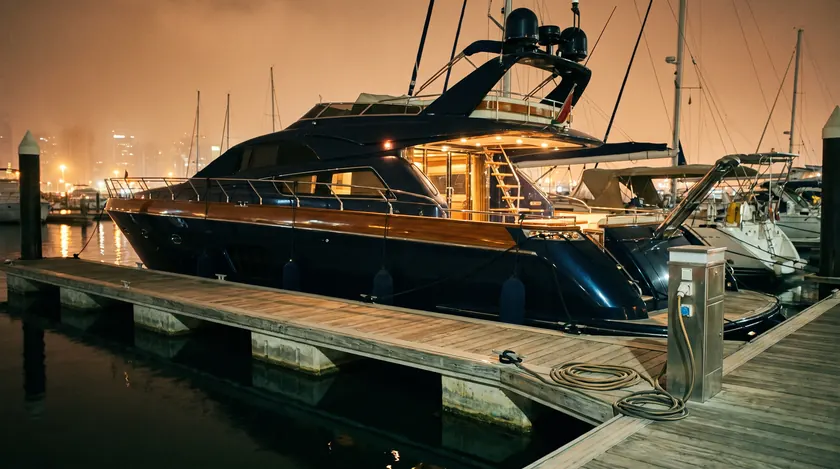
Stand on almost any dock in Jeddah or Doha and look at the sterns. Plenty of the flags flying there are not Saudi or Qatari at all. Cayman Islands and Marshall Islands ensigns turn up on Gulf-owned yachts constantly, and that is not an accident or a loophole, it is a deliberate, common choice we walk clients through on nearly every purchase.
This guide sets out why that happens, what registering locally actually involves in each of the five markets we cover, and where a non-citizen genuinely can and cannot put a Gulf flag on a yacht.
Why so many Gulf-owned yachts fly an offshore flag
The pattern repeats across every market we work in. Owners in Saudi Arabia, Qatar, Oman, Bahrain and Kuwait alike frequently keep higher-value yachts flagged offshore, Cayman Islands or Marshall Islands most often, rather than under the local flag, for three consistent reasons: charter flexibility, resale liquidity and crew-licensing and insurance frameworks that are already well established internationally.
Local flagging is not wrong or unusual. It just suits a different kind of ownership: a yacht permanently based in one country's waters, with no plan to charter it commercially or sell it into a different jurisdiction's buyer pool. A yacht that might do any of those things keeps more options open flying an offshore flag.
GCC flag versus offshore flag, country by country
Here is how each of the five local registries stacks up against the offshore alternative owners keep choosing instead.
| Country | Local authority | Local flag notes | Offshore alternative |
|---|---|---|---|
| Saudi Arabia | MAWANI, plus SRSA in the Red Sea zone | No aviation-style prefix; MAWANI issues Certificate of Registration, SRSA layers yacht-specific rules | Cayman Islands, Marshall Islands, Malta |
| Qatar | Ministry of Transport (MOT) | QR1,500 fee, marine-surveyor inspection required, Certificate of Qatar Registry issued | Cayman Islands, Marshall Islands |
| Oman | MTCIT, Directorate General of Maritime Affairs | Tonnage-based fees, filed through MTCIT's ePortal | Cayman Islands, Marshall Islands |
| Bahrain | Ports & Maritime Affairs (PMA), via the Marasi platform | Open to any nationality, no citizenship or residency requirement | Cayman Islands, Marshall Islands |
| Kuwait | Kuwait Ports Authority (KPA) | Open to both Kuwaiti citizens and non-Kuwaiti nationals | Cayman Islands, Marshall Islands |
What is the most popular flag for large yachts?
Across the yacht industry generally, Cayman Islands registration, flying the Red Ensign, is consistently named among the most popular flags for large private yachts, and that pattern holds in the Gulf too. It is not the only offshore option: Marshall Islands and, for some Saudi-linked owners, Malta also appear regularly. What they share is the same appeal, an internationally recognized flag with established crew-licensing and insurance conventions behind it, rather than a newer domestic system still building out its own rules.
Why do yacht owners choose the Cayman Islands flag?
The same three reasons repeat on every call: charter flexibility, since Cayman registration works cleanly with the commercial charter frameworks used internationally, resale liquidity, since a buyer anywhere recognizes a Cayman-flagged yacht's paperwork without translation, and crew-licensing and insurance frameworks that are already mature and internationally accepted rather than newly built. It is exactly the kind of choice we see on a flagship-tier yacht like a Riva 88 Folgore, where resale liquidity across an international buyer pool matters even more than usual. For an owner who might charter, sell across borders or crew the yacht internationally, that maturity is worth more than the convenience of a local flag.
Can a non-citizen register a boat in Bahrain or Kuwait?
Yes, in both, and this is one of the clearest differences between markets in this guide. Bahrain's PMA runs registration through its Marasi digital platform, explicitly open to vessel owners of any nationality without a citizenship or residency requirement, and it has processed more than 25,000 users and 8,000-plus vessels through that system. Kuwait's registration through the Kuwait Ports Authority is likewise open to both Kuwaiti citizens and non-Kuwaiti nationals.
That openness does not mean every owner chooses to use it. Even in Bahrain and Kuwait, many higher-value private yachts stay flagged offshore anyway, for the same charter and resale reasons that apply everywhere else in this guide.
Prefer to just ask? Send a short message, we reply the same day.
Ask a questionWhat is a flag of convenience, and is it legal?
A flag of convenience is simply a registry that will flag a vessel owned by someone outside that country, an open registry rather than a closed, citizens-only one. It is a long-standing, entirely legal part of international maritime law, used by commercial shipping and private yacht owners alike, not a loophole or a grey area. Cayman Islands and Marshall Islands are both open registries in this sense.
What matters legally is that the yacht still has to comply with the safety, crew-licensing and insurance rules its flag state actually enforces, an open registry is not the same as no regulation. Confirm the specific compliance requirements with the flag registry or your flag agent before you assume offshore means unregulated.
Does the Marshall Islands allow yacht chartering?
Marshall Islands registration sits inside the same pattern repeated across every Gulf market in this guide: owners choose an offshore flag specifically for charter flexibility, and Marshall Islands is one of the two flags named consistently alongside Cayman Islands for exactly that reason. We would not quote a specific chartering regulation without checking it against your yacht's intended charter structure, so treat this as a strong general signal rather than a substitute for asking the Marshall Islands registry or a flag agent directly about your specific plan.
Which authority registers yachts under the Qatari or Omani flag?
Qatar's Ministry of Transport handles Small Craft and Vessel Registration. After a marine-surveyor inspection covering hull, deck access, safety and power-system compliance, and a QR1,500 fee, it issues a Certificate of Qatar Registry.
Oman's Ministry of Transport, Communications and Information Technology, MTCIT, through its Directorate General of Maritime Affairs, processes registration via a maritime-affairs ePortal. It issues a Certificate of Registration and a marine-navigation license, with fees set by tonnage: under 5 tonnes runs 20,500 baisas per tonne, minimum OMR 40 and maximum OMR 3,000, while 5 to 50 tonnes runs OMR 50 plus 500 baisas per tonne above 50 tonnes, maximum OMR 5,000.
How we would actually decide
If the yacht will charter commercially, might sell to a buyer outside the country, or needs crew licensed and insured under an internationally recognized framework, we lean offshore, Cayman Islands or Marshall Islands. If it is a family yacht permanently based in one country's waters with no charter or resale-abroad plan, local registration through MAWANI, Qatar's MOT, Oman's MTCIT, Bahrain's PMA or Kuwait's KPA is simpler and, in Bahrain's case particularly, genuinely fast through the Marasi platform.
See what that decision looks like against a real purchase in our guide to importing a yacht to the Gulf, against the ownership numbers in our Saudi Arabia cost guide, or check yacht service options in Bahrain if Marasi's open registration has you leaning local.
Frequently asked questions
What is the most popular flag for large yachts?
Cayman Islands registration, flying the Red Ensign, is consistently named among the most popular flags for large private yachts worldwide, and that holds true across Gulf-owned fleets too. Marshall Islands is the other flag we see most often alongside it.
Why do yacht owners choose the Cayman Islands flag?
Mainly for charter flexibility, resale liquidity and crew-licensing and insurance frameworks that are already internationally established. A Cayman-flagged yacht's paperwork is recognized by buyers, charter brokers and insurers everywhere, which matters more to an owner who might sell or charter across borders than the convenience of a local flag.
Can a non-citizen register a boat in Bahrain or Kuwait?
Yes. Bahrain's PMA processes registration through its Marasi platform, open to any nationality without citizenship or residency requirements. Kuwait's Kuwait Ports Authority registration is likewise open to both Kuwaiti citizens and non-Kuwaiti nationals.
What is a flag of convenience, and is it legal?
It is an open ship registry that flags vessels owned by people outside that country, as opposed to a closed, citizens-only registry. It is a long-standing, legal part of international maritime law used throughout commercial shipping and private yachting, though the yacht still has to meet the safety, crew and insurance rules its flag state enforces.
Which authority registers yachts under the Qatari or Omani flag?
Qatar's Ministry of Transport issues a Certificate of Qatar Registry after a marine-surveyor inspection and a QR1,500 fee. Oman's MTCIT, through its Directorate General of Maritime Affairs, issues a Certificate of Registration and navigation license via its ePortal, with fees set by tonnage.
Weighing a Cayman flag against a local one
Tell us how you plan to use the yacht, charter, resale, or purely private, and we will tell you which flag actually fits that plan.
Ask a question